I bought some

Blocking wires that is.

The packet is quite small but then these are the flexible wires that don’t use up a lot of space when not in use.

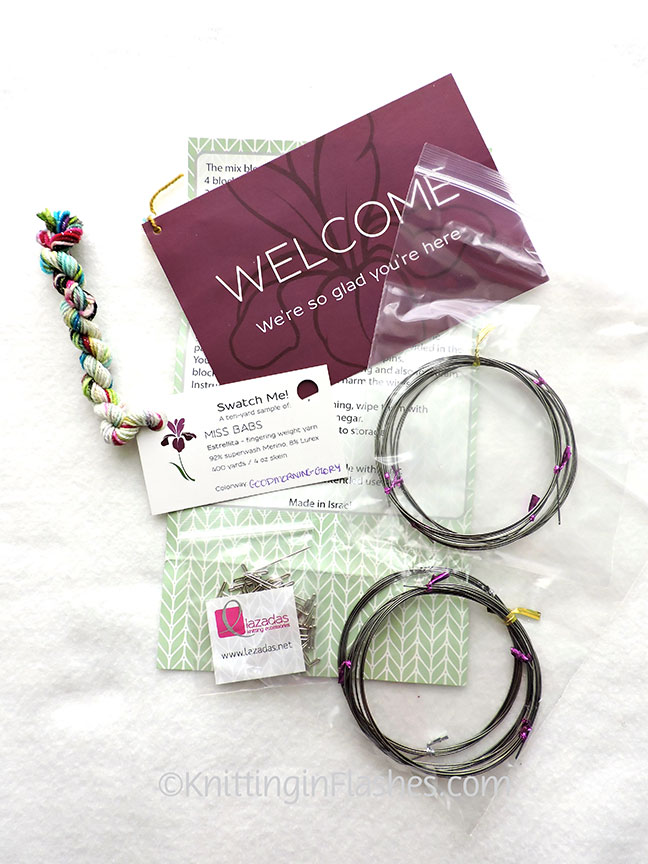
This is the mixed set that includes 3 – 70-inch wires, 4 – 35-inch wires and 30 T-pins.

I’ve already blocked another neck wrap with them and they are a delight to use.

These were ordered from Miss Babs.  As a welcoming gift, she included three stitch markers…

…and a cute ten-yard twist of this gorgeous yarn.

One day I’ll even buy some of her hand-dyed yarns.  They are all so beautiful!

Smalltown, USA

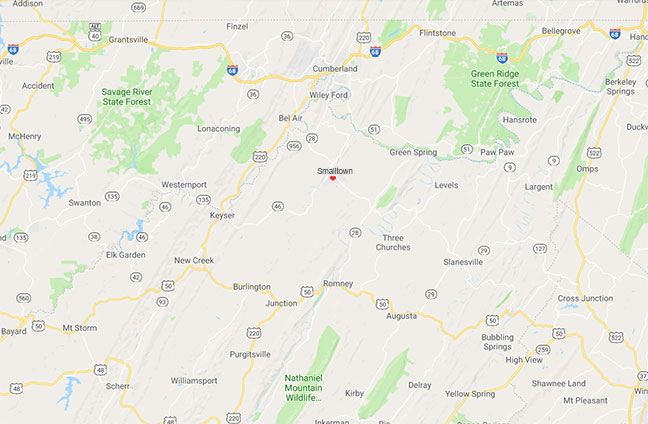
I live in Smalltown USA.

That fact really hit home the other day while I was mailing something at the post office.

The postal worker and another customer were admiring my Don’t Tread on Me purse that I made last year.

Customer:  That is a really cool purse.

Postal worker:  Yeah.  I really like it.

Me:  Thanks.  I made it.

C&Pw:  Really?  How did you do it?

Me: I knit it really big then I tossed it into the washing machine with hot water and it shrunk to this size.

Customer:  Did you mean to do that?

Me:  Yes, so that it would be a smaller size.

Customer:  Was it hard?

Me:  Not really.  The wool was a bit scratchy and that made it tough on my hands but it wasn’t that hard to knit.

Customer:  Oh, you could sell those.  I bet someone would buy it for $50.

Me:  Well, I have $70 in yarn and $5 in the hardware so if I were to sell it, I’d charge $500.  It was a lot of work and it’s lined, too.

Postal worker:  If you decided to sell them, then she (customer) and I would quit our jobs and come and work for you!

Me:  Or I could sell the pattern for $30 and wouldn’t have to do all that work.

Smalltown, USA
Blocking wires

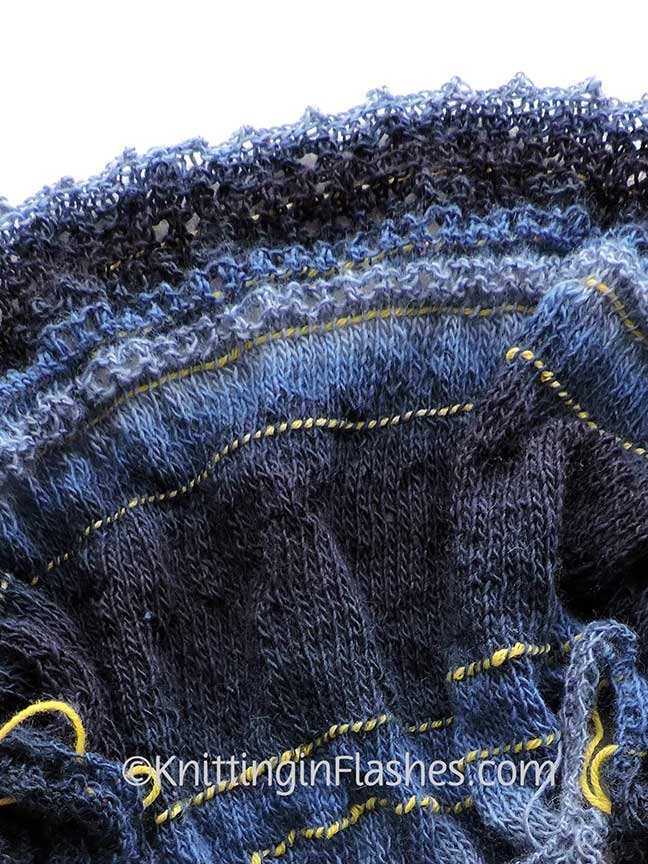
I’ve got another Spindrift Shawl completed.  Well, except for the blocking.

Why so knit another one so soon?  Well, I wasn’t all that pleased with the colors of first one.  One of the visiting twin granddaughters loves the rainbows and unicorns so I offered it to her at Thanksgiving.  Well, I can’t give one twin something without giving the other one so I had knit another Spindrift Shawl for her.  Only we’re calling them neck wraps instead of shawls.  Nine-year-olds don’t wear shawls.

I blocked the other Spindrift with pins.  Fun? Not.

I don’t have blocking wires to help with that process but understand how useful they are.  Blocking wires are thin wires threaded through an edge stitch and making it easier to keep the edges straight during blocking, and allowing for fewer pins to shape the item.  Here is an excellent article explaining how and why this is done.

I have another shawl in my queue that I’ll talk about another time.  I’m not sure if I’ll knit any others later but I decided that want a set of flexible wires as they would be easier to store.  And blocking wires can be used on other knitted items, too.

So, when you block your knitted or crocheted items do you use pins, straight blocking wires or flexible wires?

I remember now

The Bacardi Cardigan sweater is knit on circular needles though knit flat.  The reason is so the color changes don’t have to start and end on the same edge.  If the color you need is on the other side, just turn the work over and start knitting/purling from that edge. It can get tricky but it saves from weaving in hundreds of ends when finished.  And weaving in cotton yarn has challenges quite different from wool.  It’s slippery, doesn’t like to stay put and has a mind of its own.

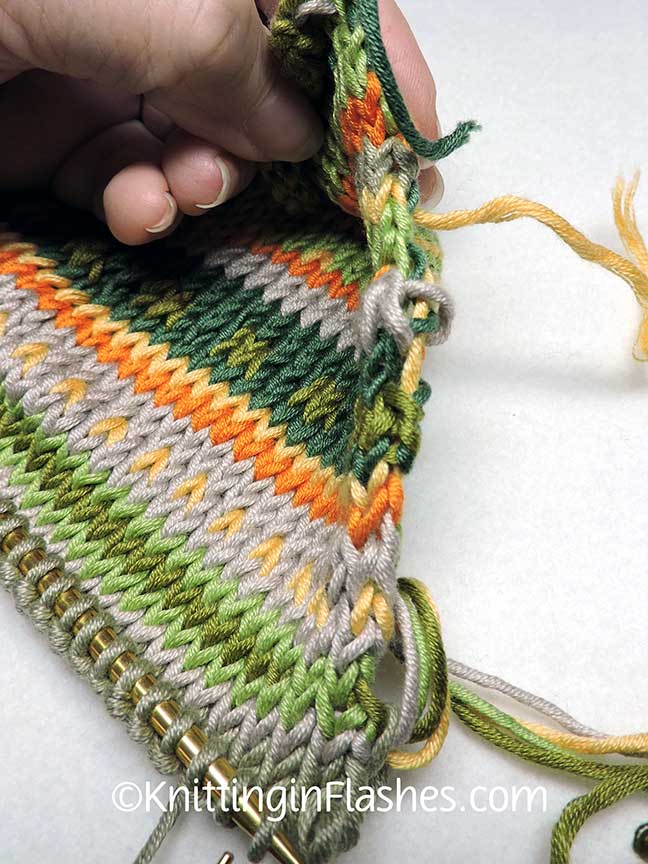
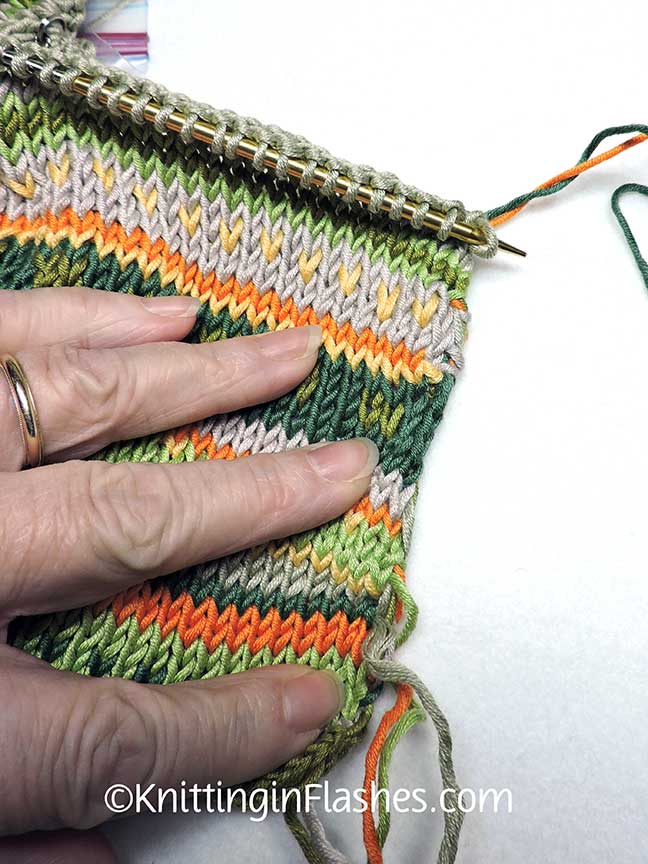
I remember now why I put my Bacardi Cardi in hibernation.  Besides having six balls of yarn attached to the needles…

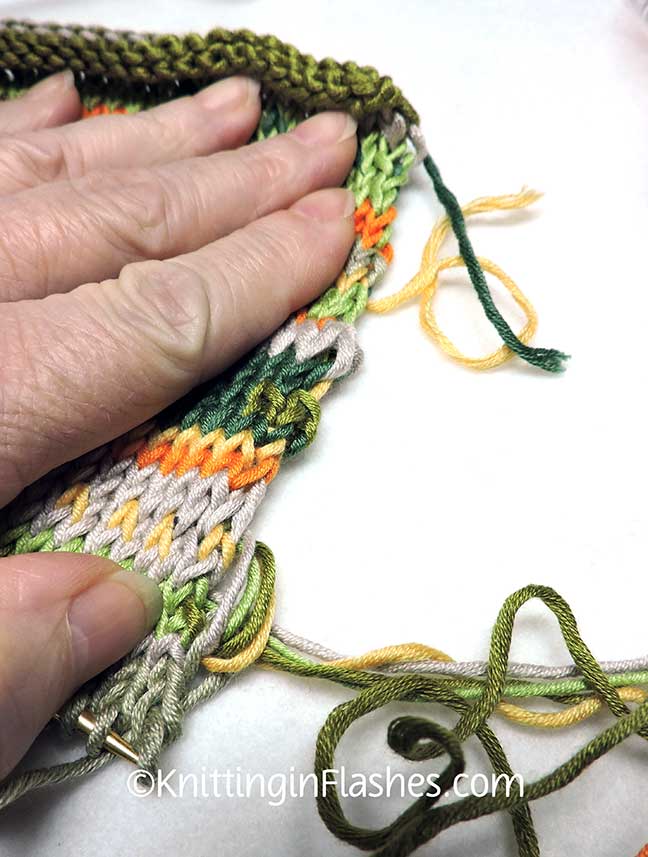
…the edges are wonky.

Some areas are nubby and the yarn doesn’t want to lay flat.

And the tension is too tight or too loose in places.

I think I must…

…rip it

and start over.

One plus is that I do have the correct gauge with US #5 needles even though I did knit a swatch earlier, it was good to know that the swatch didn’t lie.

I found a few videos on making a better selvage edge while carrying several colors of yarn that might be helpful.  I would need to add another stitch to each side but if it helps with that unevenness and bulk, it will be worth it:

  • This one is a great technique and is right to the point of what I was looking for.
  • Way #5 in this video.  This is the same technique as above and begins at 8:51 but watch the entire video if you want other to see other methods.

I also asked the designer, Barbara Gregory, for suggestions.  Her reply:

One suggestion for the edges is to occasionally work the first stitch of a row (preferably a row of a single color) with one of the yarns that is being carried up the edge. This stitch will not show once seaming and bands are completed, but it will anchor the carried yarn and help you to maintain the desired tension along that vertical edge.


My other thought regarding the edges is to do seaming and picking up of stitches for the band more than a single stitch in from the edge if necessary to get a clean edge.

So I’m ready to try this again!